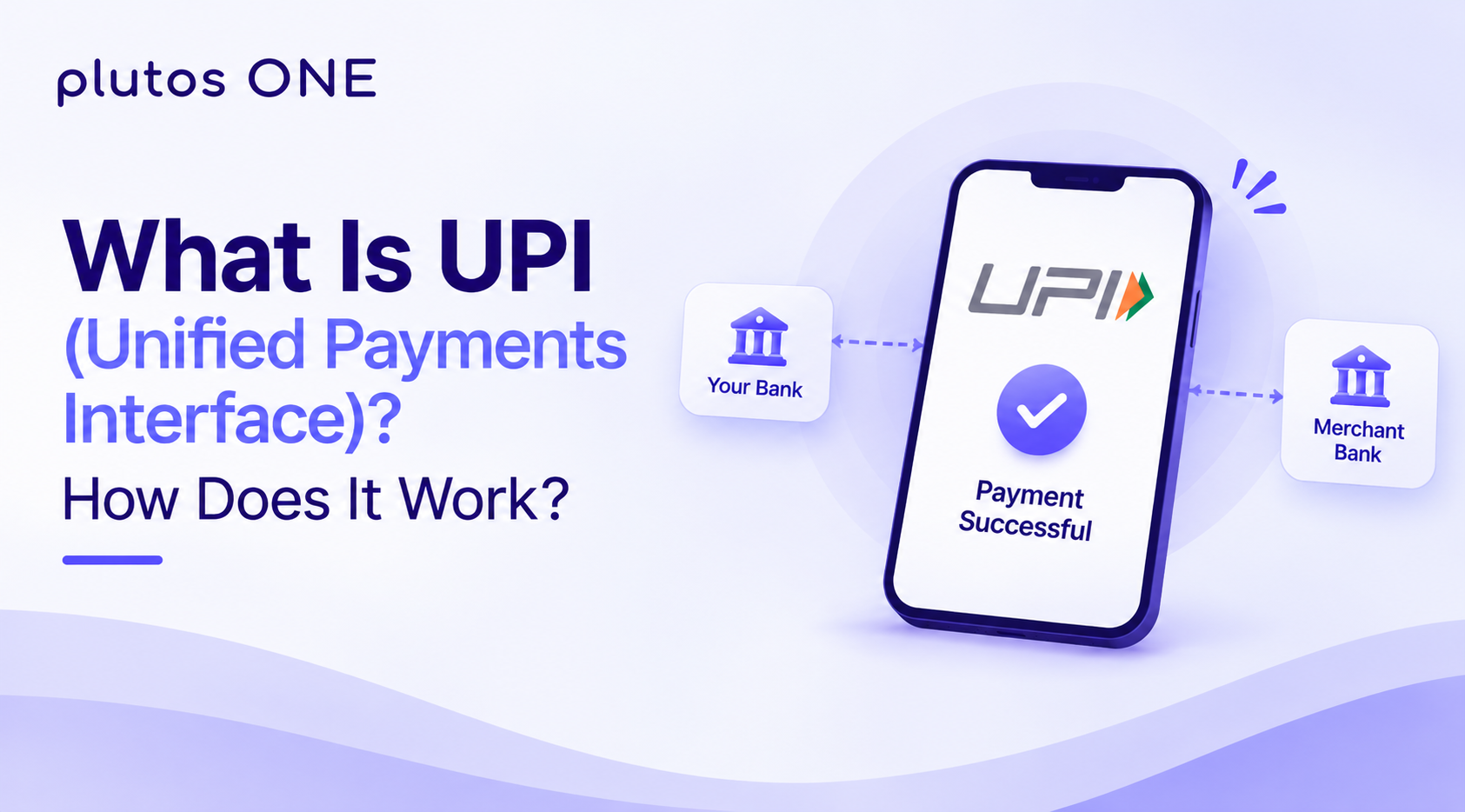
UPI has changed how people in India send and receive money. From paying at a local shop and splitting a restaurant bill to making online purchases and transferring money between bank accounts, UPI has made digital payments a regular part of everyday life. But what happens after someone scans a QR code or enters a UPI ID and taps Pay? How does the payment reach the right bank account, and which organisations make the transaction possible? UPI, or Unified Payments Interface, is an instant payment system developed by the National Payments Corporation of India (NPCI). It allows users to transfer money between bank accounts through participating UPI-enabled applications without having to enter the recipient's complete bank account details for every transaction. For banks, fintechs and businesses, UPI is more than a convenient payment option. It is an important part of India's interoperable digital payment infrastructure. The full form of UPI is Unified Payments Interface. It is an instant payment system developed by the National Payments Corporation of India (NPCI) launched on April 11, 2016 that enables money transfers between participating bank accounts through a mobile application or other supported interfaces. UPI allows users to link eligible bank accounts to a UPI-enabled application and make payments using identifiers such as a UPI ID, mobile number or QR code, depending on the supported payment method. Unlike traditional bank transfers that require users to enter account numbers and IFSC codes for every transaction, UPI simplifies payment initiation through a common interface. For example, a customer can scan a merchant's UPI QR code, enter the amount, authenticate the payment and complete the transaction directly from their linked bank account. UPI is built over the Immediate Payment Service (IMPS) infrastructure and supports instant, interoperable bank-to-bank payments. UPI stands for Unified Payments Interface. Each word describes an important part of the system: Unified: Brings participating banks and payment applications onto a common payment interface. Payments: Supports the transfer of money between participating accounts. Interface: Provides a common way for applications, banks and users to initiate and process transactions. The system is operated by NPCI, which manages several retail payment systems in India. UPI connects the customer-facing payment application, participating banks and the NPCI-operated UPI network to process transactions. Here is a simplified example of how a UPI payment works: Imagine a customer buying groceries worth ₹850 at a retail store. The customer scans the store's QR code and pays through a UPI application. The transaction generally follows these steps: Payment initiation: The customer scans the merchant's QR code or enters the recipient's UPI ID and payment amount. Payment details: The UPI application displays the recipient's details and prompts the customer to proceed. Authentication: The customer authorises the debit using the required UPI PIN or another supported authentication method. Transaction routing: The payment request is processed through the participating PSP and bank systems and routed through the UPI network. Bank verification: The remitter bank checks the account and transaction details and processes the debit request. The beneficiary bank receives the corresponding credit instruction. Transaction response: The transaction status is communicated back through the participating systems. Payment confirmation: The customer and merchant receive the transaction status through their respective applications or systems. Simplified UPI transaction flow: Customer → UPI Application → PSP Bank → NPCI UPI Network → Remitter and Beneficiary Banks → Transaction Status The exact technical sequence can vary depending on the transaction type and participating entities. The important point is that UPI provides a common interoperable framework through which different banks and payment applications can communicate. UPI works through several participants, each with a defined role in the payment process. NPCI developed and operates UPI. It manages the network framework, technical standards, participant onboarding requirements and operating rules that enable interoperable transactions. The remitter bank is the bank from which the customer's money is debited. It verifies the customer's account and processes the debit request after the required authentication. The beneficiary bank is the bank that receives the transaction information and credits the recipient's account after successful processing. A PSP bank provides UPI-related services and enables participating applications to connect with the UPI ecosystem. It also has responsibilities relating to the applications and participants it supports. A Third-Party Application Provider (TPAP) is a non-bank application provider that offers UPI services to customers through an application in partnership with a PSP bank. The UPI application is the interface customers use to initiate payments, link eligible accounts, scan QR codes, view transaction history and manage supported payment features. These participants work together to make UPI interoperable across participating banks and applications. UPI supports different payment methods, making it useful for person-to-person transfers, merchant payments and other payment use cases. A UPI ID, also called a Virtual Payment Address (VPA), is a unique payment identifier linked to a user's bank account through a UPI-enabled application. Instead of sharing bank account details, users can share their UPI ID to receive money. Customers can scan a merchant's UPI QR code using a supported payment application. The QR code can contain the merchant's payment details and, depending on its type, the transaction amount. Users can make payments through a mobile number where the number is mapped to a supported UPI identity or payment address. Customers can select UPI at an online checkout and complete the payment through a supported UPI application or payment flow. UPI AutoPay enables customers to authorise recurring payments or mandates for eligible services, such as subscriptions, bills and other recurring obligations. UPI Lite is designed to simplify eligible low-value payments through a supported UPI application, subject to the applicable NPCI guidelines and limits. The availability of these features depends on the participating bank, application and transaction type. UPI offers several features that support digital payments across individuals, merchants and financial institutions. Interoperability: Enables payments between participating banks through different UPI-enabled applications. Instant transfers: Supports real-time payment processing, subject to system and bank availability. 24/7 availability: Digital payment transactions can be initiated beyond conventional banking hours. Multiple payment options: Supports UPI IDs, QR codes and other approved payment initiation methods. Account linking: Allows users to link eligible bank accounts to supported UPI applications. Secure authentication: Uses UPI PIN-based authentication and other supported security measures. Merchant acceptance: Enables businesses to receive digital payments through QR codes and online payment integrations. These features have helped UPI become an important payment channel for everyday transactions as well as digital commerce. UPI has grown into one of India's most widely used digital payment systems. According to NPCI's official UPI product statistics, October 2026 recorded approximately 25,466.70 million transactions, amounting to ₹31,52,929.46 crore in transaction value. The statistics also reported 758 banks live on UPI during the month. That is approximately 2,546.67 crore transactions worth ₹31.53 lakh crore in a single month. These figures demonstrate the scale at which banks, payment applications, merchants and technology infrastructure providers need to support digital payment transactions. Source: NPCI, UPI Product Statistics, October 2026. Figures are based on the monthly statistics published by NPCI. UPI creates value for different participants across the digital payment ecosystem. Convenient money transfers: Send and receive money without repeatedly entering complete bank account details. Multiple payment options: Pay through UPI IDs, QR codes and supported online payment interfaces. Interoperability: Use different participating UPI applications to transact across supported banks. Transaction visibility: Access transaction history and payment status through supported applications. Round-the-clock access: Initiate payments outside traditional banking hours, subject to system availability. Digital payment acceptance: Accept payments through UPI QR codes and supported online integrations. Simplified customer payments: Give customers a familiar way to complete transactions. Wider payment reach: Accept payments from customers using different participating banks and UPI applications. Digital transaction records: Access transaction information through the acquiring bank or payment service provider. Reduced dependence on cash: Offer customers an additional digital payment option. Interoperable payment access: Connect with a wider network of participating banks and applications. Digital banking engagement: Offer customers UPI services through bank applications. Scalable payment infrastructure: Support a growing range of digital payment use cases. Transaction visibility: Monitor transaction status, exceptions and operational performance. New payment experiences: Support merchant payments, recurring mandates and other eligible UPI services. UPI uses defined authentication, security and operating requirements to help protect digital transactions. Some important security practices include: UPI PIN: Customers use their UPI PIN to authorise applicable debit transactions. Device and account verification: Registration and device-related checks help establish the user's access to the UPI application. Transaction notifications: Payment applications and banks provide transaction information to help users monitor account activity. Interoperable network rules: Participating entities operate under NPCI's UPI framework and applicable regulatory requirements. However, users must also follow safe payment practices. Never share your UPI PIN, OTP or other confidential banking credentials. A UPI PIN is used to authorise a payment from your account; you do not need to enter it simply to receive money. Always verify the recipient's details before approving a transaction. A UPI transaction may fail or remain pending for several reasons, including: Temporary bank or network downtime. Connectivity issues during transaction processing. Incorrect UPI PIN or authentication failure. Insufficient account balance. Bank-side processing delays. Transaction timeouts or delayed responses. A failed or pending transaction does not always mean that the payment has been permanently lost. If the sender's account is debited but the recipient does not receive the amount, the customer should check the transaction status in the UPI application and contact the relevant bank or payment application provider if the issue remains unresolved. Transaction references, timestamps and bank records help participating entities investigate payment exceptions and handle complaints. For businesses and financial institutions, this also highlights the importance of transaction monitoring, exception handling and payment reconciliation. Related reading:Payment Reconciliation: What It Is, Process, Types & Automation UPI is often compared with IMPS, NEFT, RTGS and Bharat Connect. However, these systems serve different purposes and operate through different frameworks. UPI and IMPS are related because UPI is built over IMPS infrastructure, but they are not the same payment system. Similarly, UPI and Bharat Connect are not competing alternatives. UPI facilitates the movement of money, while Bharat Connect provides a standardised network for bill presentment and bill payments. UPI can be used as a payment method within a Bharat Connect bill-payment journey. For a deeper explanation, read ourBharat Connect (BBPS) guide for banks, fintechs and businesses. A UPI switch is a technology layer that helps participating systems manage UPI transaction requests and responses. Depending on its architecture and the participant's role, it can support functions such as transaction routing, processing, response management, monitoring and exception handling. For banks and payment providers, the switch is an important part of the technology infrastructure required to connect with payment networks and manage transaction flows. It is useful to understand the distinction: UPI is the interoperable payment system and network developed and operated by NPCI. A UPI switch is technology infrastructure used by a participating organisation to support its UPI transaction processing and connectivity requirements. The switch does not independently operate the UPI network or replace NPCI's role. It works within the applicable network rules, technical specifications and participant responsibilities. UPI is one part of a wider digital payment ecosystem that includes banks, payment applications, payment service providers, merchants, technology providers and payment networks. Different payment systems support different needs: UPI enables instant bank-account payments. IMPS, NEFT and RTGS support different types of electronic fund transfers. Bharat Connect standardises bill-payment connectivity. Banking Connect supports interoperable internet and mobile banking payment flows. Payment switches and processing platforms help participating organisations manage their transaction infrastructure. For banks and fintechs, the challenge is not simply enabling one payment method. It is building reliable connectivity, transaction processing, monitoring, reconciliation and customer support across multiple payment channels. This is where payment infrastructure and interoperability become important to the growth of digital payments in India. As a payments infrastructure fintech and NPCI Technology Service Provider (TSP) for Bharat Connect, plutos ONE works with banks, fintechs and businesses to support their participation in India's digital payment ecosystem. Its infrastructure capabilities cover areas including: Bharat Connect: Technology enablement for Biller Operating Units (BOUs), Customer Operating Units (COUs) and Bharat Connect for Business (BCB). Banking Connect:Interoperable internet and mobile banking payment connectivity for participating banks and payment providers. Transaction infrastructure: Technology support for payment processing, connectivity, monitoring and operational workflows across supported solutions. Payment reconciliation: Tools and workflows that help organisations track transaction records, identify exceptions and improve operational visibility. For banks and financial institutions, these capabilities form part of the wider infrastructure needed to connect payment channels, manage transaction operations and support digital payment services. UPI has become an important part of India's digital payment infrastructure by making bank-to-bank transactions more accessible and interoperable. Its growth depends on the coordinated functioning of NPCI, participating banks, PSPs, TPAPs, merchants and technology providers. As digital payment volumes continue to expand, reliable transaction processing, network connectivity, monitoring and reconciliation will remain important for banks and businesses. Understanding how UPI works helps organisations look beyond the payment interface and recognise the infrastructure that makes everyday digital transactions possible. UPI stands for Unified Payments Interface. It is an instant payment system developed by NPCI that enables interoperable bank-account transactions through supported applications. UPI was developed by the National Payments Corporation of India (NPCI), which operates the UPI payment system. UPI connects a payment application, participating banks and the NPCI-operated network. A customer initiates and authenticates a payment, the participating systems process the request, and the transaction status is returned to the relevant applications. UPI supports payments around the clock, including weekends and bank holidays. However, individual transactions may be affected by bank downtime, network issues or system availability. Yes. UPI is interoperable and allows customers to transfer money between participating bank accounts through supported UPI applications. A UPI ID, also known as a Virtual Payment Address (VPA), is a unique payment identifier linked to a bank account through a UPI-enabled application. It allows users to send or receive money without sharing complete bank account details. IMPS is an immediate interbank electronic fund transfer service, while UPI provides an interoperable payment interface with additional features such as UPI IDs, QR-based payments and merchant payment functionality. UPI is built over IMPS infrastructure. A transaction may fail because of connectivity issues, bank downtime, authentication errors or processing delays. Customers should check the transaction status and contact their bank or payment application provider if the amount has been debited but the recipient has not received it. No. UPI is an instant payment system for transferring money, while Bharat Connect is an interoperable bill-payment network. UPI can be used as a payment method within a Bharat Connect transaction.What Is UPI?
What Is the Full Form of UPI?
How Does UPI Work?
What Are the Key Components of the UPI Ecosystem?
1. National Payments Corporation of India (NPCI)
2. Remitter Bank
3. Beneficiary Bank
4. Payment Service Provider (PSP) Bank
5. Third-Party Application Provider (TPAP)
6. UPI Application
What Are the Different Ways to Make UPI Payments?
UPI ID or Virtual Payment Address (VPA)
QR Code Payments
Mobile Number-Based Payments
Online Merchant Payments
UPI AutoPay
UPI Lite
What Are the Key Features of UPI?
How Popular Is UPI in India?
What Are the Benefits of UPI for Consumers, Merchants and Banks?
Benefits for Consumers
Benefits for Merchants and Businesses
Benefits for Banks and Financial Institutions
Is UPI Safe for Digital Transactions?
What Happens When a UPI Transaction Fails?
What Is the Difference Between UPI and Other Digital Payment Systems?
What Is the Role of a UPI Switch in Digital Payments?
How Does UPI Fit Into India's Wider Digital Payment Infrastructure?
How Does Plutos ONE Support India's Payment Infrastructure?
Conclusion
Frequently Asked Questions About UPI
1. What is the full form of UPI?
2. Who developed UPI in India?
3. How does UPI work?
4. Is UPI available 24/7?
5. Can UPI transfer money between different banks?
6. What is a UPI ID?
7. What is the difference between UPI and IMPS?
8. What happens if a UPI transaction fails?
9. Is UPI the same as Bharat Connect?

Bill Pay▼
Banking Connect
BCB
Vouchers
Orbit
AI Labs